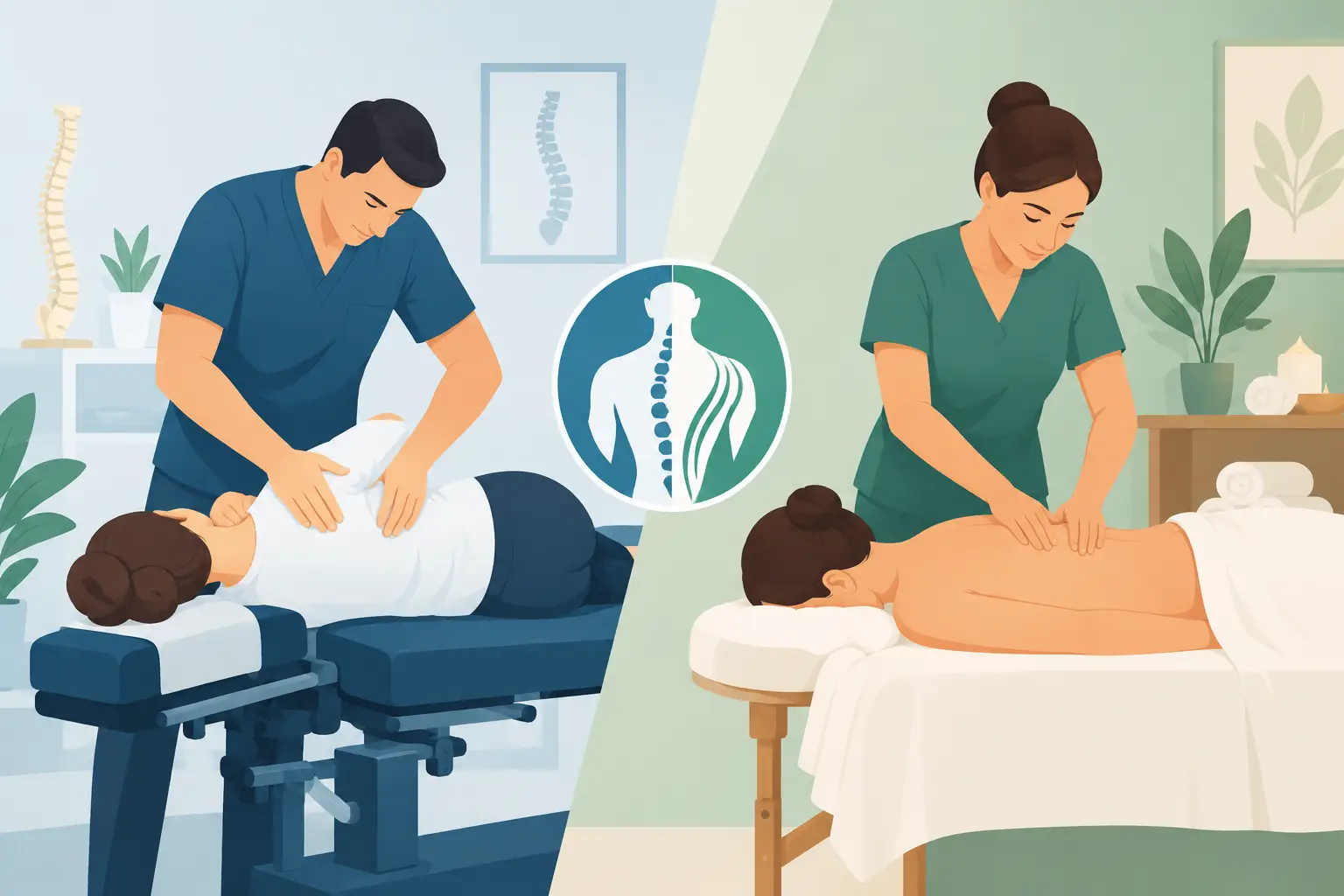
A stiff neck after a long workweek, low back pain that flares when you lift your child, or a headache that starts at the base of your skull can make even normal routines feel harder. When comparing chiropractic versus massage therapy, the best choice is not always one or the other. These hands-on treatments work differently, and many people benefit from a care plan that uses each at the right time.
Both approaches can support pain relief, better movement, and recovery from everyday strain or injury. The difference comes down to what is contributing to your symptoms: joint motion, muscle tension, movement habits, an injury, or a combination of factors.
Chiropractic Versus Massage Therapy: The Core Difference
Chiropractic care focuses on how your spine, joints, and nervous system support comfortable movement. A chiropractor evaluates your symptoms, health history, posture, range of motion, and the way your body moves. Treatment may include chiropractic adjustments, joint mobilization, soft-tissue work, therapeutic stretches, and guidance for moving more comfortably at home or work.
Massage therapy focuses primarily on muscles and other soft tissues. A massage therapist uses hands-on techniques to ease tension, improve circulation, and help tight or overworked areas relax. Depending on your needs, massage may be gentle and calming or more focused on areas of persistent tightness.
Neither service is simply about feeling good for an hour. When it is part of a personalized plan, chiropractic care or massage therapy can help you return to the activities that matter to you, whether that means sitting through a workday, exercising, gardening, sleeping more comfortably, or keeping up with family.
When Chiropractic Care May Be a Better Fit
Chiropractic care may be especially helpful when pain is tied to restricted joint movement, spinal stiffness, posture changes, or an injury that has affected the way you move. For example, someone with low back pain may notice that bending, turning, or standing from a chair feels limited. Another person may have neck pain and headaches that worsen after hours at a computer.
A chiropractor can assess the bigger picture rather than focusing only on the sore area. An ankle injury, for instance, can change your walking pattern and place extra strain on your knee, hip, or low back. Addressing joint movement and function may help reduce that chain of compensation.
People often seek chiropractic care for back pain, neck pain, headaches, sciatica-like symptoms, stiffness, and reduced mobility. It may also be a practical part of recovery after a car accident, sports injury, or repetitive strain from work. Treatment plans should be tailored to your condition, comfort level, and goals. A first visit is also an opportunity to ask questions and understand why a particular approach is being recommended.
Chiropractic adjustments are not the only tool chiropractors use. Some patients benefit from gentler mobilization, stretching, or focused muscle work. The right approach depends on your exam findings and your health history.
When Massage Therapy May Be a Better Fit
Massage therapy can be a strong choice when muscle tension is the main issue. You may feel knots between your shoulder blades, a tight band across your low back, sore hips after activity, or muscles that never seem to let go after a stressful week. Massage can help calm guarded muscles and make movement feel easier.
It can also be useful when a patient is not ready for more active treatment because an area is tender or highly sensitive. Gentle massage may help the body relax enough to tolerate stretching, exercise, or chiropractic care more comfortably over time.
Massage is not limited to relaxation. Therapeutic massage can support recovery from repetitive movements, physical labor, exercise soreness, and postural strain. Still, deeper pressure is not automatically better. If tissue is irritated after a recent injury, overly aggressive work can increase soreness. Clear communication about pressure, symptoms, and prior injuries helps make each session productive and comfortable.
Why Some Patients Benefit From Both
Muscles and joints do not work in isolation. When a joint is not moving well, nearby muscles often tighten to protect it. When muscles are chronically tight, they can limit joint movement and make posture harder to maintain. That is why the question is sometimes less about chiropractic versus massage therapy and more about how the two services can work together.
A combined plan may be useful for a person with neck stiffness, tension headaches, and tight upper-back muscles. Chiropractic care may address restricted movement in the neck and upper back, while massage therapy can help ease the surrounding muscle tension. For someone with low back discomfort, massage may reduce tightness in the hips and glutes while chiropractic treatment supports healthier spinal and pelvic movement.
The timing matters. Some patients feel best with massage before an adjustment because it helps them relax. Others prefer massage after chiropractic treatment to address lingering muscle tightness. Your plan should adjust as your symptoms, activity level, and goals change.
What to Expect at Your First Visit
A thoughtful first appointment should begin with listening. Before treatment, your provider should ask when the pain began, what makes it better or worse, whether you have had prior injuries, and how symptoms affect your daily life. They may also ask about work demands, exercise, sleep, stress, and activities you have had to limit.
For chiropractic care, the exam may include posture, range of motion, orthopedic testing, and an assessment of the areas related to your symptoms. Your chiropractor will explain what they find and discuss care options before moving forward. If massage is recommended, the approach should reflect your comfort with pressure and the sensitivity of the area being treated.
A good plan also includes realistic expectations. Some people feel relief quickly, particularly when muscle tension or minor movement restrictions are involved. More persistent pain, recurring headaches, or recovery after an injury may require a series of visits and changes to daily movement habits. The goal is not to keep you in care forever. It is to help you feel better, move better, and have practical tools to support your progress between visits.
Choosing Care Based on Your Symptoms and Goals
If your main concern is a stiff joint, limited range of motion, recurring back or neck pain, or headaches connected to neck tension, starting with a chiropractic evaluation can provide helpful direction. If your symptoms are mainly muscle soreness, stress-related tightness, or overworked areas after physical activity, massage therapy may be a natural starting point.
If you are unsure, you do not need to diagnose yourself before making an appointment. A provider can help identify whether chiropractic care, massage, or a combination is appropriate. At Summit Chiropractic & Massage in West Linn, care is centered on individual needs rather than a standard treatment routine.
There are also times when hands-on care should wait. Seek prompt medical attention for symptoms such as sudden severe weakness, numbness that is worsening, loss of bowel or bladder control, fever with significant back pain, unexplained weight loss, or pain after a serious fall or accident. Your provider may also recommend medical evaluation if your symptoms do not fit a typical musculoskeletal pattern.
A Practical Way to Decide
Think about what you want to get back to doing. Perhaps you want to turn your head comfortably while driving, finish a shift without low back pain, return to walking, or wake up without a tension headache. Those goals give your provider a useful starting point and help guide treatment choices.
The right care should feel personal, understandable, and connected to your everyday life. Whether you begin with chiropractic care, massage therapy, or both, a plan that respects your symptoms and helps you move with more confidence can be a meaningful step toward feeling like yourself again.