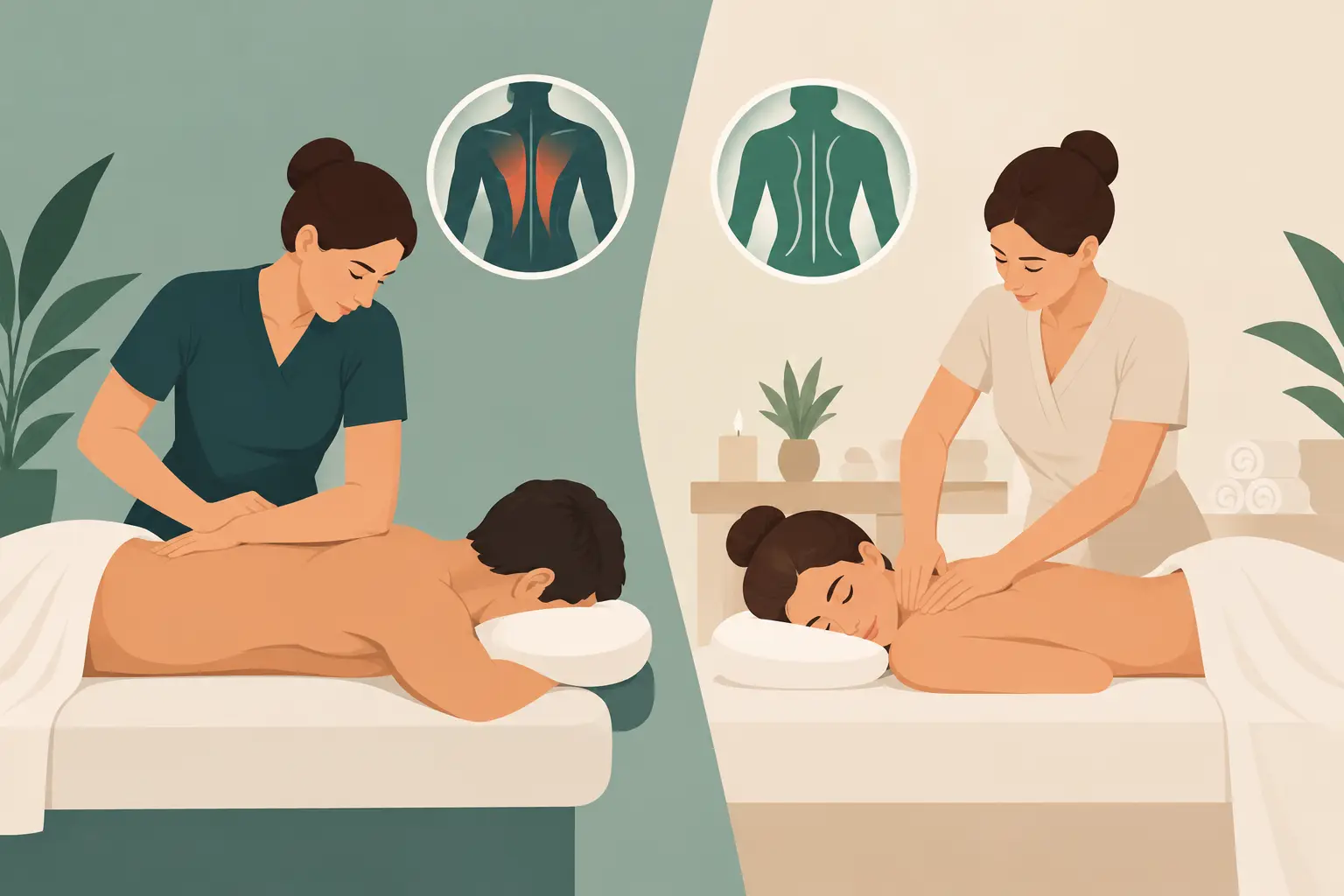
A massage should fit what your body needs that day, not simply how much pressure you think you can handle. When comparing deep tissue versus Swedish massage, the better choice depends on whether you are dealing with persistent tightness and restricted movement or need a calmer, restorative session to help your body recover.
Both approaches use hands-on techniques to support comfort and mobility, but they feel different and serve different purposes. For people in West Linn and the Portland area managing work strain, old injuries, active hobbies, or ongoing back and neck discomfort, understanding that difference can make it easier to choose care with confidence.
Deep Tissue Versus Swedish Massage: The Main Difference
Swedish massage is generally designed to relax the body and improve circulation through lighter to moderate pressure. The therapist often uses long, gliding strokes, kneading, and gentle movement of the muscles and joints. It can calm an overworked nervous system while easing everyday muscle tension.
Deep tissue massage uses slower, more focused pressure to address deeper layers of muscle and the connective tissue around them. It is often used when a particular area feels chronically tight, tender, or limited. Rather than treating the entire body with the same level of pressure, a therapist may spend more time on specific areas, such as the shoulders, low back, hips, or legs.
Neither massage is automatically better. Swedish massage is not “just” relaxation, and deep tissue massage is not a test of toughness. The right approach is the one that supports your comfort, function, and treatment goals without leaving you overly sore or guarded.
What Swedish Massage Feels Like
Swedish massage usually feels soothing and rhythmic. Pressure can be adjusted, but the overall experience tends to be gentler and more broad-based than deep tissue work. Many people choose it when stress is showing up physically through tight shoulders, jaw tension, shallow breathing, poor sleep, or a general sense of stiffness.
This style can be especially helpful when your body feels tired but sensitive. If you have been sitting at a desk, caring for children, traveling, or returning to exercise after time away, lighter work may help you feel more comfortable without demanding a long recovery period afterward.
Swedish massage may also be a practical starting point for someone who is new to massage therapy or unsure how their body will respond. A skilled therapist can still focus on areas of concern while keeping the session comfortable and relaxing.
Swedish massage may be a good fit when you want to:
- Reduce general muscle tension and stress
- Feel more relaxed after a demanding week
- Support circulation and recovery after everyday activity
- Ease mild stiffness without intense pressure
- Become more comfortable with regular massage care
What Deep Tissue Massage Feels Like
Deep tissue massage is more deliberate. The therapist may use slower strokes, sustained pressure, and focused work to address areas that do not release easily. You may notice a strong sensation in a tight muscle, but the pressure should remain productive and tolerable.
Deep tissue work is commonly chosen for recurring patterns such as a stiff neck from computer work, low back tension, tight hips, sore calves, or shoulders that feel constantly elevated. It can also be useful for active adults who have specific muscle restrictions affecting exercise, posture, or everyday movement.
A deep tissue session does not need to be painful to be effective. Sharp pain, numbness, tingling, or the feeling that you need to hold your breath are signs to speak up. More pressure is not always more helpful. When muscles are pushed beyond what the body can tolerate, they may tense further instead of releasing.
Some people feel mild tenderness for a day or two after deeper work, particularly if they have not had massage recently or the area was very tight. Drinking water, taking a short walk, and using gentle movement can help you stay comfortable afterward. If soreness is significant or lasts longer than expected, let your provider know before your next visit.
Choosing Based on Your Symptoms and Goals
The choice often comes down to the type of discomfort you are experiencing. Swedish massage may make sense when stress, poor sleep, and generalized tightness are your main concerns. Deep tissue massage may be more appropriate when a particular muscle group feels restricted, achy, or connected to a movement problem.
For example, a parent carrying a toddler on one hip may have a focused area of shoulder and low back tension that responds well to targeted deeper work. A professional who feels drained, tight all over, and unable to relax after a demanding season may benefit more from Swedish techniques. An active runner with persistent calf or hip tightness may need a session that includes both approaches.
The best massage is often not one style from start to finish. A therapist may begin with Swedish-style techniques to warm and relax the tissue, then use deeper, focused work where it is needed. This individualized approach can be more comfortable and more useful than following a fixed label.
Massage Pressure Should Always Be Personalized
Your pain tolerance, health history, activity level, and current symptoms all matter. A person recovering from an accident, returning to activity after an injury, or dealing with a flare-up may need a different level of pressure than someone seeking maintenance care.
Before your session, share where you feel discomfort, what movements are difficult, how long symptoms have been present, and what makes them worse or better. Also mention recent injuries, surgeries, medications, skin sensitivity, pregnancy, osteoporosis, blood clotting concerns, or any diagnosed health condition. This information helps the provider make safe, appropriate choices.
It is also helpful to state your preference plainly. You can ask for lighter pressure, more focused work, or less attention to a sensitive area at any point during the massage. Good care is collaborative. Your feedback is part of the treatment, not an interruption.
When Massage May Need a Different Approach
Massage can be a valuable part of a conservative care plan, but it is not right for every situation at every moment. New severe pain, unexplained swelling, fever, open wounds, suspected fracture, significant bruising, or sudden weakness should be evaluated before deep pressure is used.
If you have a recent injury or a medical condition that affects circulation, healing, sensation, or bone strength, ask your healthcare provider what type of massage is appropriate. The goal is to support recovery, not work through a problem that needs a different form of care first.
For persistent back pain, neck pain, headaches, or mobility limits, massage may be most helpful when it is part of a broader plan. At Summit Chiropractic & Massage, massage-centered therapeutic support can be coordinated with chiropractic care when appropriate, helping address both muscle tension and the movement patterns contributing to discomfort.
What to Expect After Your Massage
After Swedish massage, many people feel calmer, looser, and ready for a good night’s sleep. After deep tissue work, you may feel more aware of the treated area before it begins to feel easier to move. Both responses can be normal.
Give yourself permission to notice how your body responds over the next day or two. Gentle walking, normal hydration, and avoiding a sudden jump into strenuous activity can be sensible choices after a focused session. If your goal is long-term mobility or recurring pain relief, one massage may offer a helpful reset, but a personalized care plan often provides more lasting progress.
The question is not whether deep tissue or Swedish massage is superior. It is whether the pressure, pace, and focus match what your body needs right now. A thoughtful conversation before treatment can turn a massage appointment into practical support for moving more comfortably through work, activity, and daily life.